Our primary focus in our BUILD phase is squat and push movements, supported by core stability.
These patterns give us a foundation we can strengthen throughout the month and carry into future phases. Here’s why they come first.
Why Squat?
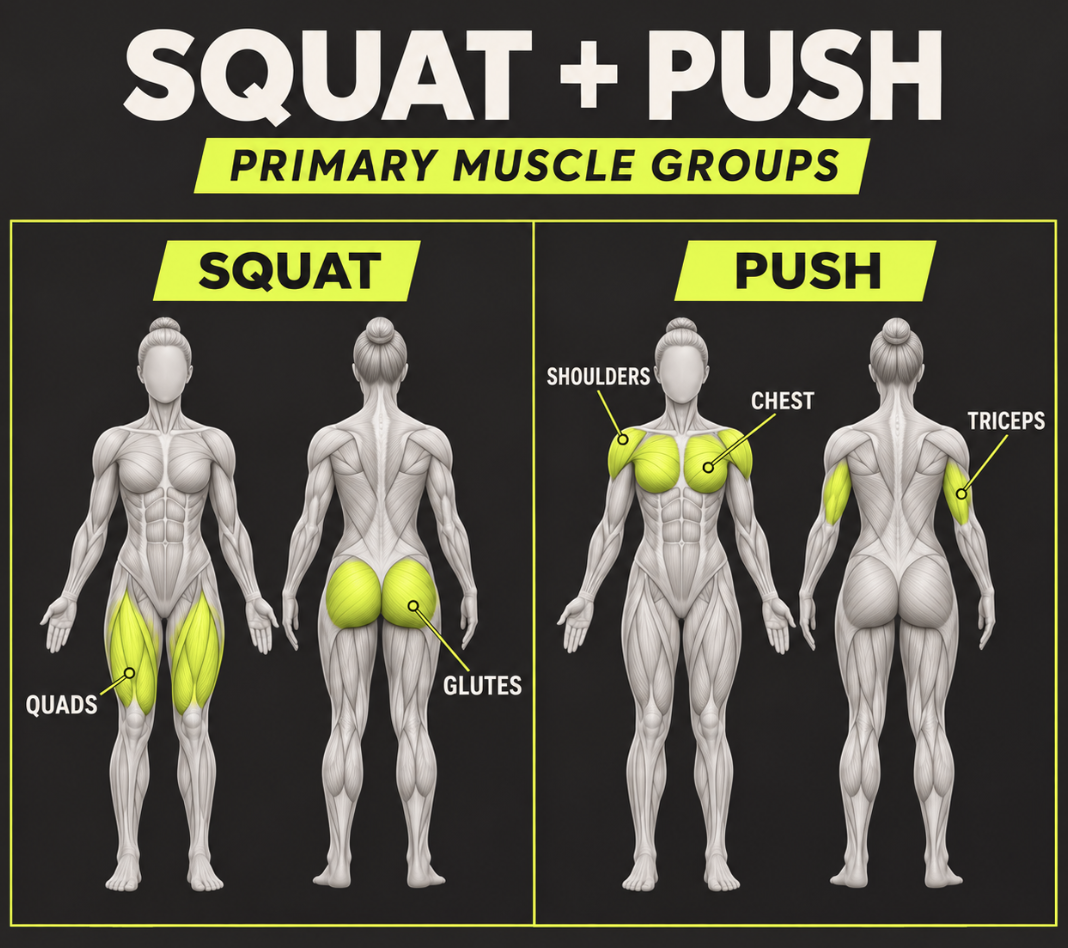
Squatting develops strength through the quads and glutes while asking your hips, knees, and ankles to work together. It’s a pattern you use when sitting down, standing up, and lowering yourself to pick something up.
In class, you’ll see variations such as goblet squats, front squats, box squats, and tempo squats. Each gives us a way to adjust the challenge. A box can provide a consistent depth target, while a slower tempo gives you more time to practice control.
We’ll help you find a variation and range of motion that suit your current ability, then build from there.
Why Push?
Pushing exercises strengthen the chest, shoulders, and triceps. Chest presses, shoulder presses, landmine presses, and push-ups train this pattern from different angles.
Practicing these movements consistently helps you improve how you position your body, control the weight, and apply force. As those skills become more familiar, you can work toward greater resistance with more confidence.
Why Core Stability?
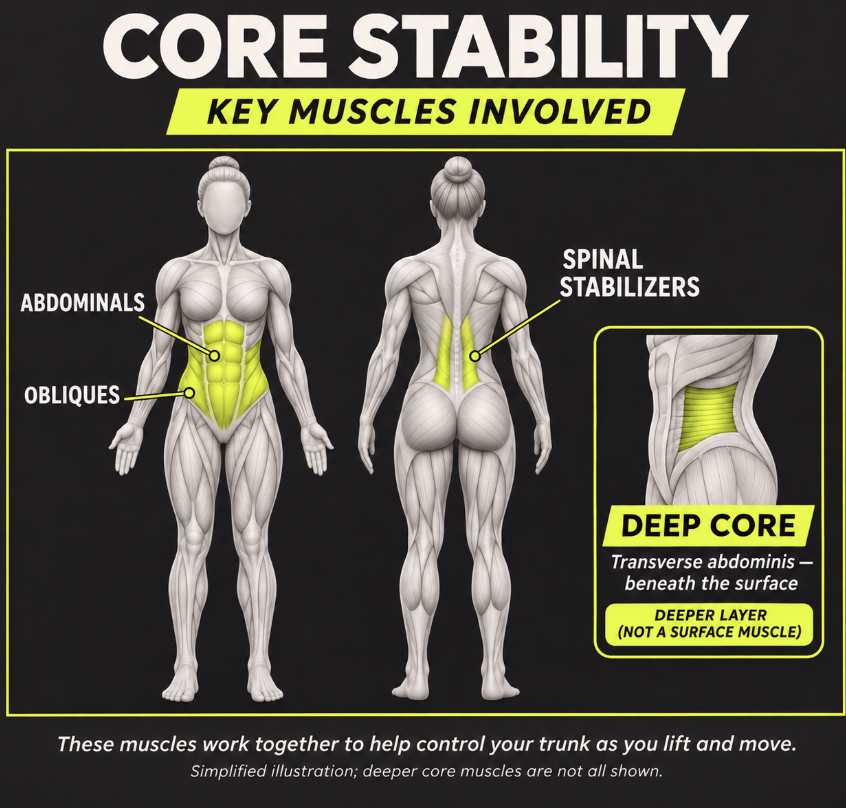
Your arms and legs create movement, while your trunk helps you maintain a strong position as you lift.
During a squat, that means controlling your torso as you lower and stand. During a shoulder press, it means pressing overhead while managing the position of your ribs and pelvis.
Exercises such as dead bugs, planks, bear holds, and loaded carries give you opportunities to practice that control. This foundation becomes especially useful when later phases introduce rotation, single-sided loading, and faster movements.
Why You’ll See Familiar Exercises
Repeating a movement gives you a chance to get better at it. You learn how it should feel, become more consistent, and can better judge when you’re ready for a heavier weight.
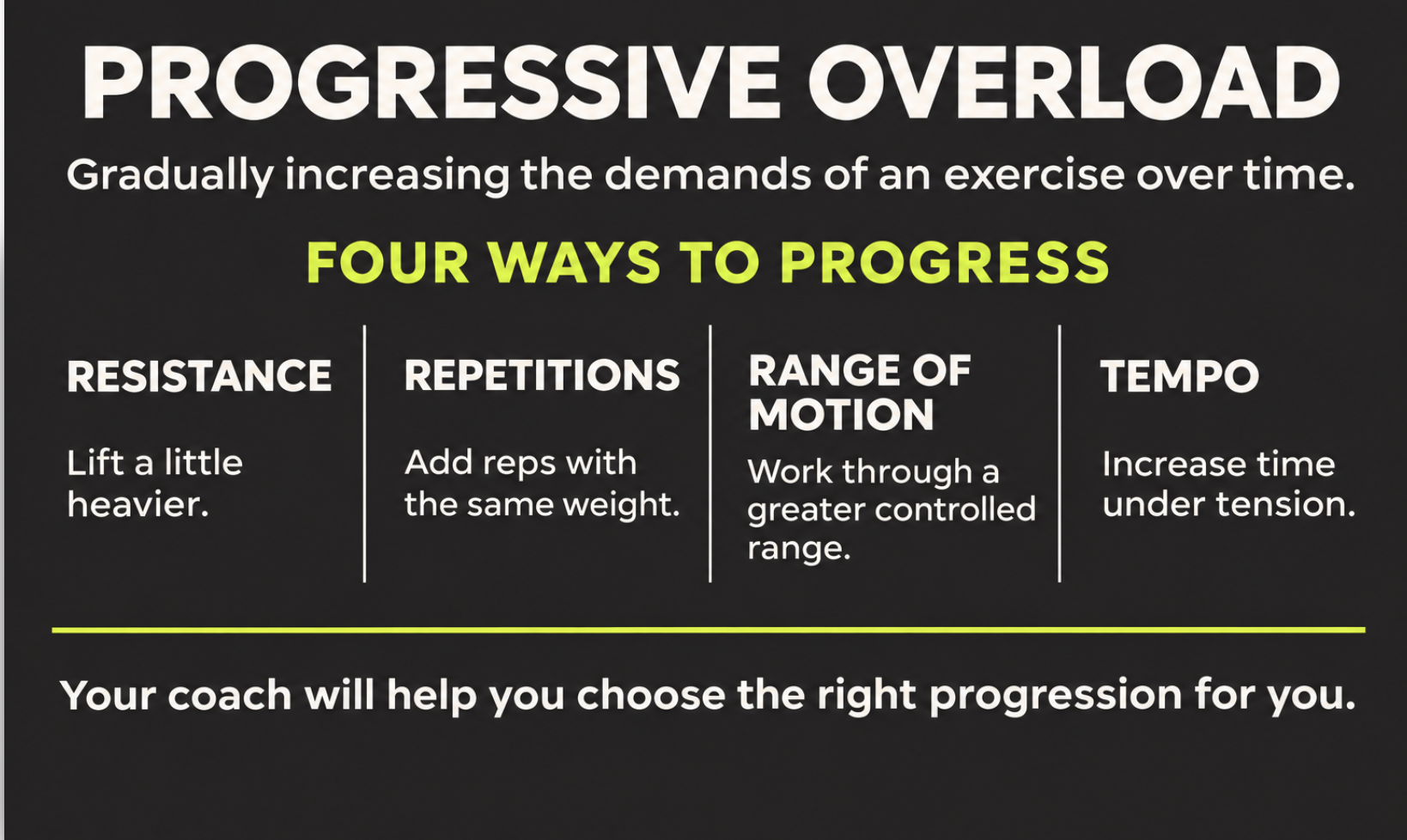
We’ll progress the challenge through resistance, tempo, range of motion, and exercise variations. On some primary strength exercises, lower rep targets will create room to focus on heavier, controlled work.
Your coach will help you choose the right next step. Sometimes that’s adding weight. Other times, it’s using the same weight with greater depth, steadiness, or control.
What to Focus on This Month
Pay attention to your weights and how your movements feel. Can you squat with more control? Does your press feel steadier? Can you maintain your position through the final rep?
Those are useful signs of progress alongside the number on your dumbbell.